
How Trench Drain Grates Work: A Clear Breakdown for Pros and Homeowners
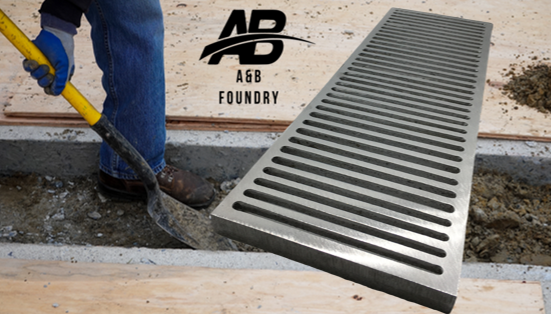
Poor drainage leads to standing water, slippery surfaces, and long-term damage to surrounding materials. The right trench drains and grates move surface water and protect foundations from erosion, slab edges from moisture intrusion, and basements and lower levels.
At A&B Foundry, we manufacture trench drain grates. We focus on brass and aluminum drain grate covers.
This article explains how trench drains work, why material choice matters, and how the metal casting process affects performance.
Trench Drains Around Pools
For an application around a pool, trench drains sit along the perimeter of the deck, often between the coping and surrounding deck material. They collect splash-out water, rainfall, and deck washdown water. The channel directs water to a drainage outlet.
Water grates for drainage in pool settings must:
- Handle constant exposure to chlorinated or salt water
- Provide slip resistance
- Maintain appearance over time
- Support foot traffic and light maintenance equipment to service the pool
Water against a structure is one of the fastest ways to cause long‑term damage, so trench drains act as a first line of defense.
Trench Drains in Landscape
Outdoor living spaces are especially vulnerable to water movement. Trench drains protect:
- Patios and pavers from shifting
- Retaining walls from washout
- Turf and planting beds from erosion
- Pool decks from standing water and slip hazards
They help maintain both the function and the aesthetics of designed outdoor spaces.
Why Brass and Aluminum Are Ideal
We work with red brass (commonly referred to as bronze), yellow brass and aluminum because these materials perform well.
Aluminum Drain Grates
Aluminum offers several benefits for trench drain grates:
- Lightweight for easy installation
- Strong for pedestrian traffic
- Natural corrosion resistance
- Clean, modern appearance
Aluminum forms a protective oxide layer. This layer resists rust and helps the grate hold up in humid, wet conditions. Around the perimeter of chlorinated pools, properly selected aluminum alloys maintain structural integrity when installed and maintained correctly.
Contractors prefer aluminum when they want:
- Reduced handling weight
- Straight, uniform bar profiles
- Consistent finish across long runs
Brass Drain Grates
Brass provides a different look and performance profile. It resists corrosion when installed and maintained corectly. Many designers choose brass water drainage grates for high-end residential and commercial applications.
Benefits of brass include:
- Resistance to deformation
- Warm architectural appearance
- Long service life in wet areas
- High-dimensional stability
Brass grates work well in:
- Luxury landscapes and residential pools
- Boutique hotels
- Indoor aquatic centers
- Spas and therapy pools
When appearance matters as much as function, brass offers both.
A Closer Look at the Metal Casting Process
The casting process affects the strength, finish, and fit of your drain grate covers. Trench drain grates must maintain tight tolerances and consistent bar spacing.
At A&B Foundry, we cast brass and aluminum drain grates for drainage in the same process as we do for products used in commercial applications.
For a detailed explanation, read our article about the metal casting process of the material, sand casting, machining, finishing, and quality control that delivers brass drains engineered for strength and style.
Check the videos on our YouTube channel with the full process created by the A&B Foundry team. Don’t forget to subscribe to our channel while you’re there to see new content whenever we upload!
Installation Tips
Proper installation extends the life of trench drains and grates. Follow these steps:
- Set the trench body at the correct elevation
- Ensure all pavers, concrete, stone or NDS (or equal) support along the channel sides
- Verify slope directs water toward the drainage outlet
- Confirm grate sections sit flat without rocking
Consider also small expansion gaps between sections when required.
About A&B Foundry
A&B Foundry specializes in brass and aluminum trench drain grates where appearance and performance both matter. Our casting process delivers grates for long-term corrosion resistance, helping avoid uneven seating, premature wear, and callbacks.
Need help choosing the right drain grate material and specifications for your pool project? Email us at sales@abfoundryllc.com to reach our team and request a quote.
FAQs
What’s the best material for trench drain grates—brass or aluminum?
Both work well, but they serve different priorities. Aluminum is lightweight, corrosion-resistant, and ideal for long runs and easy handling. Brass offers a premium architectural look and excellent chemical resistance, making it a favorite for high-end applications.
Do trench drain grates need a heavy load rating?
Know the architect's requirements. Most pool decks don’t require extreme load ratings like industrial sites. Pool applications for instance, typically focus on corrosion resistance, safe footing, clean finish, and reliable fit. Confirm the application as many drain grates are rated for heavy load capacity.
What is a good spacing during installation?
Trench drain grates should balance comfortable footing with good water capture to direct flow. Tighter, consistent spacing helps support bare feet and reduces “toe catch” issues, while still allowing drainage. The key is choosing a spacing that meets your project’s safety and performance needs, then ensuring the grate is installed accordingly.
What causes trench drain grates to rock, loosen, or wear out early?
The most common culprits are uneven seating, poor support along the channel sides, and incorrect elevation relative to support material along the channel sides. If grates don’t sit flat, they can shift, wear prematurely, or become a safety hazard, especially in high-traffic areas.